September 29, 2025 by Olivia Clemmensen (‘26)
Just three weeks into the school year, one thing has already reshaped life at SSHS: the NYS Bell-to-Bell Phone Ban. This article will share thoughts from Toga students on this policy and explore the student point of view in this shift towards no screens in the educational setting, as well as how this has affected their daily 6+ hours spent on the SSHS campus.
Before students entered a new year at Saratoga Springs High School, an explosive change to statewide education was announced, ready to take effect as soon as students set foot onto school campuses. This change quickly became the leading conversation regarding back-to-school, as students all over New York freaked out over one thing: phones. New York Governor Kathy Hochul passed a law for a Bell-to-Bell Phone Ban across all K-12 schools in the state, which was then publicized to SSHS students and families mid-summer. This ban hoped to increase the academic performance of students by removing cell phones from the classroom, with a slogan of “More Learning, Less Scrolling”. This shift to life on campus without cell phones loomed heavily over the upcoming school year, only increasing anxiety around the start of classes. In a world where technology has become such a large part of society, how were we going to make this adjustment?
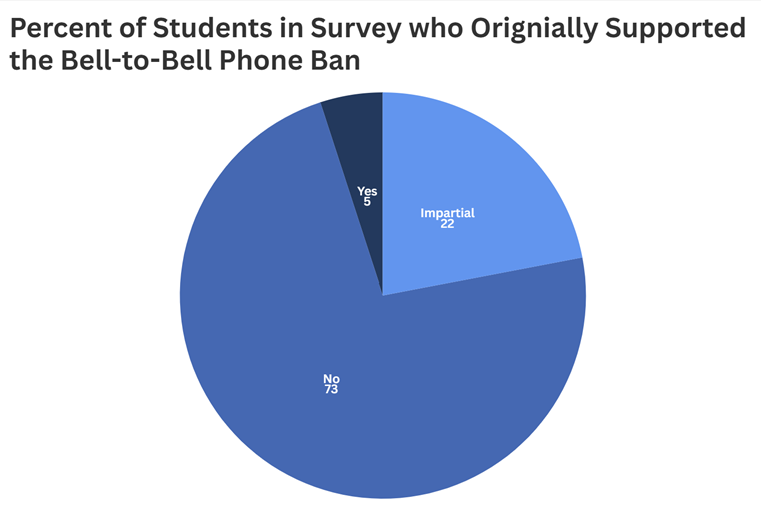
Last year, SSHS teachers limited phone usage in various ways; some had students place devices in a “phone jail” that was hung on the class’s front door where it would stay until the end of the lesson; others asked for them to be off and away in students’ bags; and others took a more relaxed approach, as long as it wasn’t interrupting the learning environment. While the infamous “phone jails” were effective during instructional time, it was hard to find a student who didn’t use their phone at all during the school day. Walking in the halls, everyone either had AirPods permanently stuck in their ears, eyes glued to screens abuzz with messages, or phones in hand like an accessory as they strolled to their next class. This is what everyone was used to. On hearing that this would all change come September, many students were furious. According to a survey shared too SSHS students via social media, around 73% were originally not in support of the cell phone ban.
As of recently, though, many students have noticed that without the ability to text people or sit alone on their phones, the halls have been much more energetic, classes more focused, and the student body more engaged. “I feel like more kids are talking to each other at school,” and “I get to talk to my friends more because they aren’t on their phones,” said seniors Arissa Gillani and Lily Maurer. While digital communication can be important in connecting with friends, face-to-face conversations are essential in such a social environment as school.
However, according to SSHS students, there were more benefits to keeping phones in school that outweighed the influx of in-person connections. Having access to personal devices during the day allowed students to keep in touch and stay up to date with important activities in their lives, like coordinating rides to and from school or communicating with bosses and athletic coaches. Claire Lizzi, a senior at SSHS, said that the new phone ban “makes it very difficult to coordinate rides home from school with my younger brother and neighbors. I also can’t contact my internship mentor or work boss, which can be super annoying.” Cell phones played a large role in students’ responsibilities outside of the classroom, especially when schedules are so often fluctuating and being adjusted. “It is harder to communicate about after-school plans and more difficult with work schedules and such,” commented student Max Miller.
Additionally, students have shared that they have not only felt disconnected when communicating regarding their jobs or after-school activities, but this new policy has also cut off connections to the outside world and the ability to unwind during the day. To some students, being able to relax and veg out on their phone is the only time they can take a break from a stressful schedule, or they enjoy the time they have during art class to listen to their own music while working on a project. “It sucks that I can’t listen to music from my phone anymore,” commented Toga student Thomas O’Connell. SSHS Senior Ana Sandu said that “while in class it seems fine, I feel very disconnected with society and find myself spending increasing amounts of time outside of school on my phone.” Although the phone ban has limited screen time on campus, it has left many students feeling isolated from all that is going on in the world outside of SSHS. Many students have expressed that going through the school day without this connection is difficult, as well as trying to manage the time spent on their phones after school, when they are making up for lost time and catching up on everything they missed during the day.
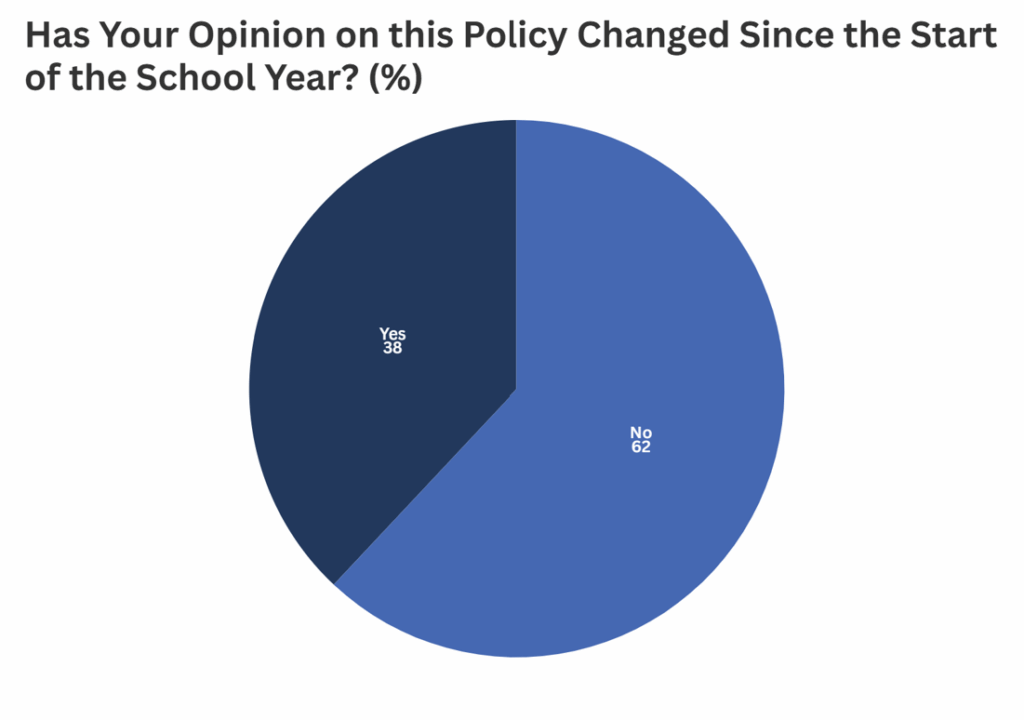
This new Bell-to-Bell Phone Ban has already become a defining event in this school year, and from the student body’s perspective, there have been mixed outcomes: some positive, like more student connections and in-class focus, but some negative too, like feeling disconnected from the outside world. “At first I thought [the phone ban] was going to wreak havoc,” said Arissa Gillani, “but now my perspective has completely shifted. I find I’m able to focus better in my classes, and less drama is spread during the day. Nobody wants to admit it, but this is truly for the greater good.” A few students like Gillani have altered their opinion on the ban since school started, with 38% saying that their view on the law has changed. In a world so reliant on technology, making this change may prove to be challenging, but it may also provide openings for growth academically as well as socially for Saratoga’s student body.