
October 27, 2025 by Olivia Clemmensen (‘26)
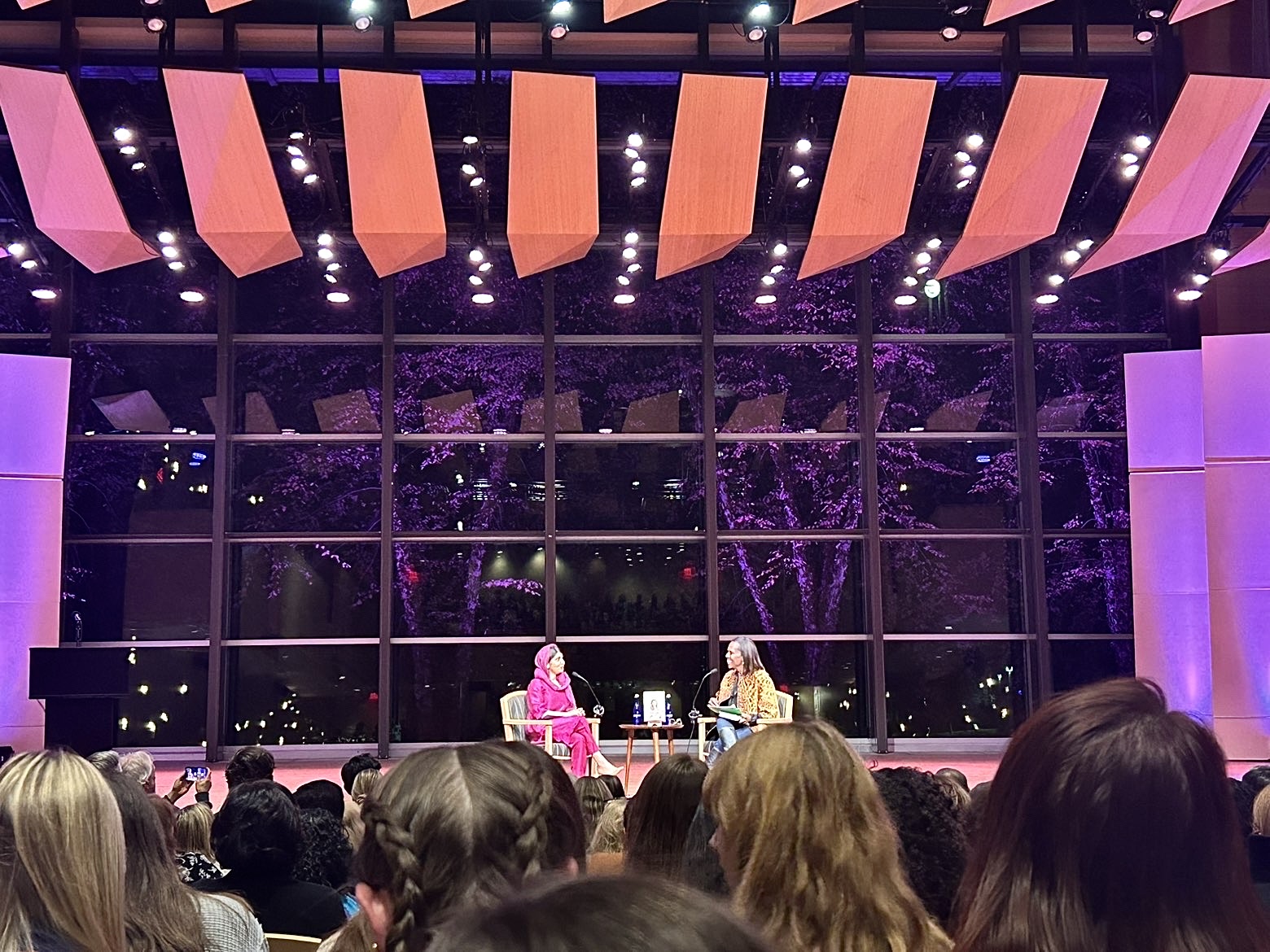
On Saturday, October 25th, world renown Pakistani activist and Nobel Prize laureate Malala Yousafzai graced Skidmore College’s Arthur Zankel Music Center with a visit to speak about her new book “Finding My Way,” and her journey of redefining and exploring a new, more genuine side of herself.
College students, locals, Saratoga students and families all flooded the center to hear this eminent activist and face of feminism speak about her experiences firsthand. When she walked onto the stage, her presence in the room was impressive on its own. Her grace and humble confidence were exactly as I’d imagined. Just being able to sit in the same room as her was something I never thought I would be able to do. The little girl inside me who first learned about her from a monthly subscription to “Girls Can! Crate” and “Who Was…?” books was screaming. Since learning about her work in speaking for education and feminism, I have been in awe of her bravery and ability to make a difference at such a young age. I can only imagine how many lives she has already touched and how many girls she has already inspired in her lifetime.
After the infamous life-altering attack on her by the Taliban when she was fifteen, she used her platform and explosion on the media to speak up for girl’s education in Pakistan, and then later broadening her mission to advocating for education all over the globe. “I was attacked by the Taliban for daring to go to school and speak out for it,” Yousafzai reflected at the Skidmore event. “I survived and I started a new life, becoming an activist for girls around the world, so no other girl has to take a bullet to be in school.”
In October of 2013, she published her first book at just sixteen years old, “I am Malala”; sharing her story of overcoming violence and adversity, kickstarting her work as a public figure and large voice in activism. That same year, Yousafzai established the Malala Foundation, an international non-profit organization advocating for girls’ education with a goal of providing 12 years of free, safe and quality education for every girl worldwide. Then, in 2014, she was awarded the Nobel Peace Prize for her work, becoming the youngest recipient of this award at age seventeen. Since then, she has continued her efforts in speaking against the Taliban and has used her growing platform to speak for accessible and quality education for every child.
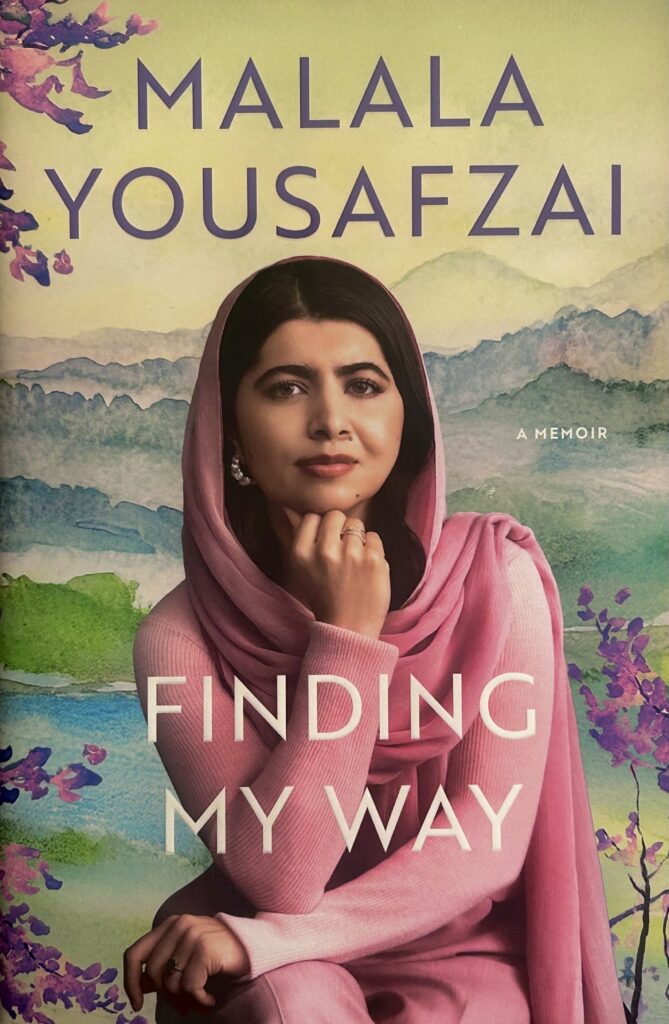
After studying at Oxford, she compiled what she learned about friendships, her education in studying Philosophy, Politics, and Economics and trying to seek normalcy in her book “Finding My Way,” which she published this October 21st. At the “Finding My Way: An Evening with Malala Yousafzai” event on the 25th, Yousafzai spoke to how important her experience at college was for her, not only in achieving the level of education she hopes every girl will be able to have, but in discovering a part of her that is beyond the public eye, speeches, and Nobel Peace Prize; a young woman who is funny, social and human.
I am sure pretty much everyone in our generation has heard of Malala. No matter where you heard about her first, whether that was in “library class” in elementary school, from your parents, or by reading a biography about her as a kid. However, what we all learned about her was the same, and knowing she got shot by the Taliban and then started speaking up for educational rights was the extent of it. “I realized that as I got older, it was the same old story that people had heard of me,” said Yousafzai. She talked on Saturday night about how yes, she was forced into the public eye by this incident, but that in the years that followed, she had tried to find ways to redefine herself and share her whole story of who she is beyond the Taliban’s bullet.
Yousafzai explained to the audience and her interviewer, Debroah Roberts, that through her newest book, “Finding My Way,” she is “reintroducing [herself] and sharing more about [her] journey through college, navigating friendships, love life, mental health and many other things.” Both Yousafzai and Roberts discussed how Yousafzai has made herself more vulnerable in this book and in her journey of discovering herself as an individual. She spoke of her time as a college student trying to balance her sleep, social and academic life just like any other student, as well as battling PTSD and panic attacks on her own and through therapy, finding love, and even how at Oxford, finding a Pakistani community helped her feel closer to home. “Everything that happened there from friendships, mental health experiences, to learning- all of that has changed me as a person, and I’m so grateful for all of it.” There is something so genuine and beautiful about such a renowned figure like Malala sharing who she is as a person outside of public view, and that she is willing to tell that story through her book.
Malala shared how as she has grown older, she had “been hearing so many opinions about who [she] should be, what [she] should say,” that with time she internalized it, losing her own voice. She explained how through writing this new book, she has realized that this is how one loses who they are, and that drowning out the voices and finding her own identity was a large part of her growth in maturing. “In some ways, I have now understood bravery and courage in a new way,” she commented. “I learned that maybe bravery and courage means you still do what you believe in even when you have anxiety and fear. In that, I am redefining the way I do my activism. I am dedicated to the work of girls’ education more than ever; this is my last mission.”
Being able to hear this amazing figure in activism and great change-maker in our world speak in the same room as me was such an incredible experience, and I think even without reading “Finding My Way” just yet, I have already learned so much more about her as a person and what she stands for, and I only hope that she continues to utilize her voice to advocate for those who can’t.