
Febuary, 9 2026 by Sarah Pipino (‘26)
From Sidibé’s Nuit de Noël photograph to Canova’s Psyche Revived by Cupid’s Kiss sculpture, Kahlo’s Frida and Diego Rivera painting to Picasso’s Lovers piece, art has been used for centuries to depict love in all its forms. This is the true purpose of art: to convey emotions so integral to the human experience that words could never adequately describe them in their fullness. Themes of romance, lust, desire, and true love can be dated back thousands of years. In fact, the current oldest-known scene representing love between two people is a cave painting of two human-like forms kissing discovered in Brazil. This cave painting is estimated to be over 50,000 years old. I can only speak for myself, but that is amazing to me. The thought that no matter how the world evolves, there are some phenomena that continue to remain the same is one that’s just as comforting as it is baffling. Valentine’s Day is just around the corner, so here are some of my personal favorite works that showcase the depth of a heart’s love.
On the Stile (1878) by Winslow Homer
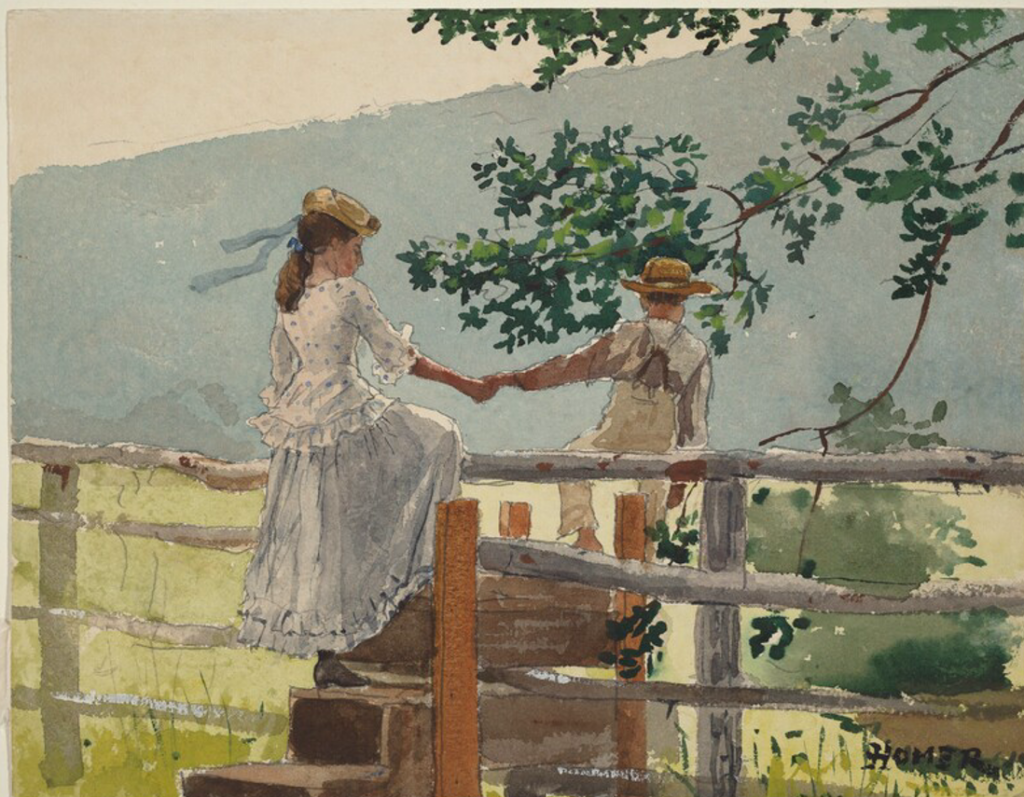
Photo source: nga.gov
Probably my favorite of all the pieces presented in this article besides Noonday Heat, this work depicts a young girl and boy holding hands as a fence separates them. Their clothes suggest they are from different social classes, and yet, their innocent, bashful attitudes render their young love undeniable in this watercolor, gouache, and graphite on wove paper.
The Birthday (1887) by Marc Chagall
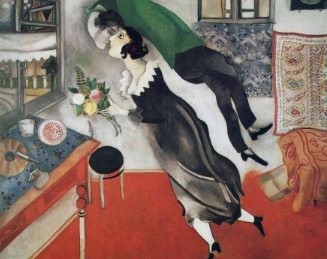
Photo source: marcchagall.net
This oil on cardboard piece was a self portrait of Chagall himself, floating lovingly above his first wife, Bella, in the home they shared together. It portrays the domesticity and quiet peacefulness of their relationship.
Lovers Walking in the Snow (Crow and Heron) (1772) by Suzuki Harunobu
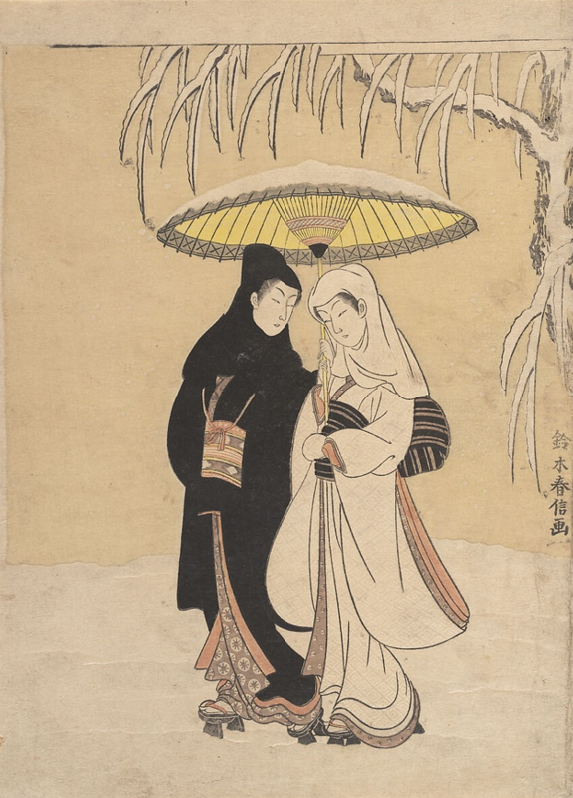
Photo source: metmuseum.org
This piece, a traditional Japanese woodblock print, is different from the rest of the works showcased in this article due to its muted yet harmonious nature. The white of the woman’s clothing and the black of the man’s show the idea of In Yō: nature’s balance between all contrasting forces.
In Bed, The Kiss (1892) by Henri de Toulouse-Lautrec
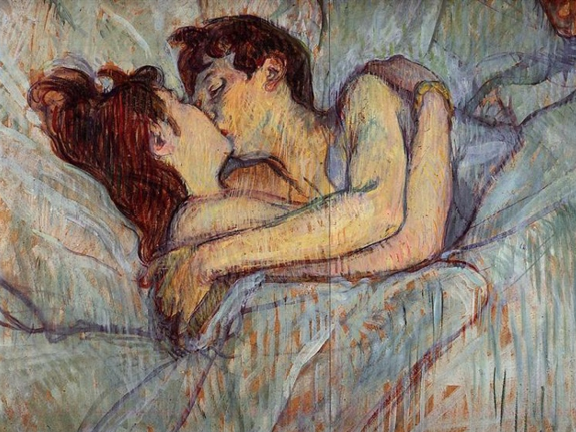
Photo source: wikiart.org
Toulouse-Lautrec was known for his depictions of the lavish and quite often risqué Parisian life of this time period. In this oil on canvas, his scene is one of two women, likely prostitutes, sharing an intimate embrace whilst still in bed.
The Lovers (Somali Friends) (1950) by Lois Mailou Jones
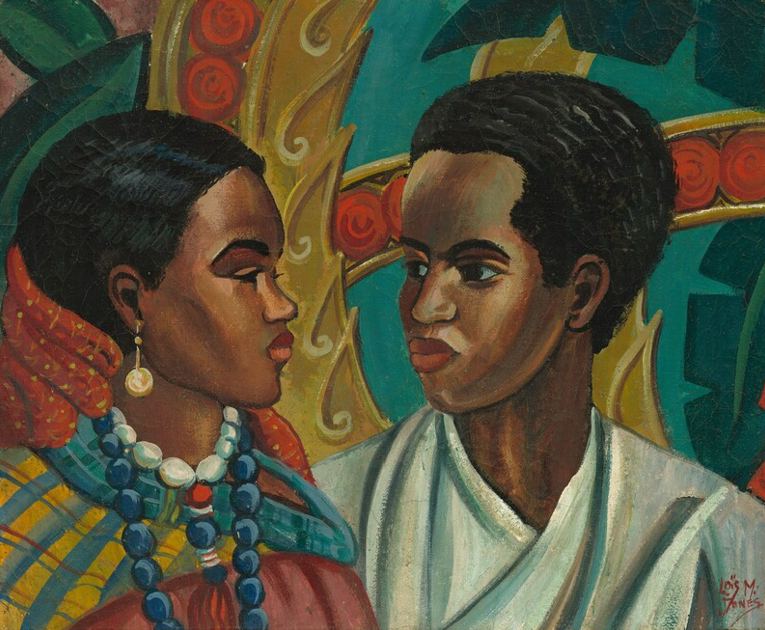
Photo source: nga.gov
What draws me to this casein on canvas is the vibrancy of it. The patterns and bright colors throughout the work show the joy that love creates – the swirling mess of bright and beautiful emotions, just like the background of this scene.
Dance in the Country (1883) by Pierre-Auguste Renoir
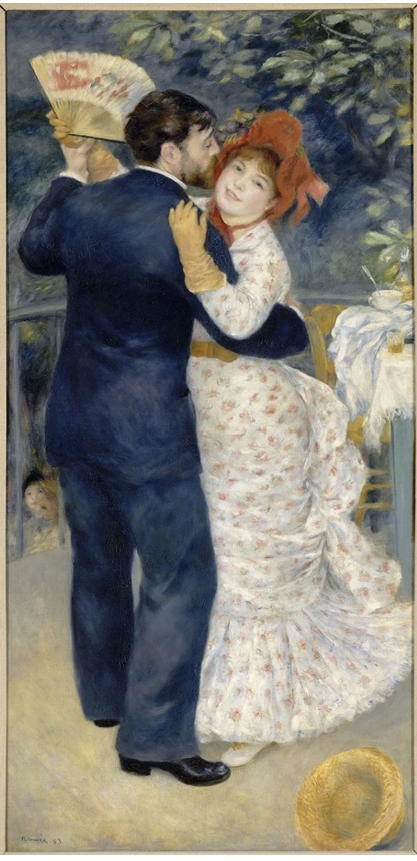
Photo source: artsy.net
Aside from its technical achievements, this oil painting is one of the most well-known Renoir pieces due to its carefree energy, with the woman infectiously smiling at the viewer and the man’s hat discarded on the ground in favor of spinning her around.
Sappho and Erinna in a Garden at Mytilene (1864) by Simeon Solomon
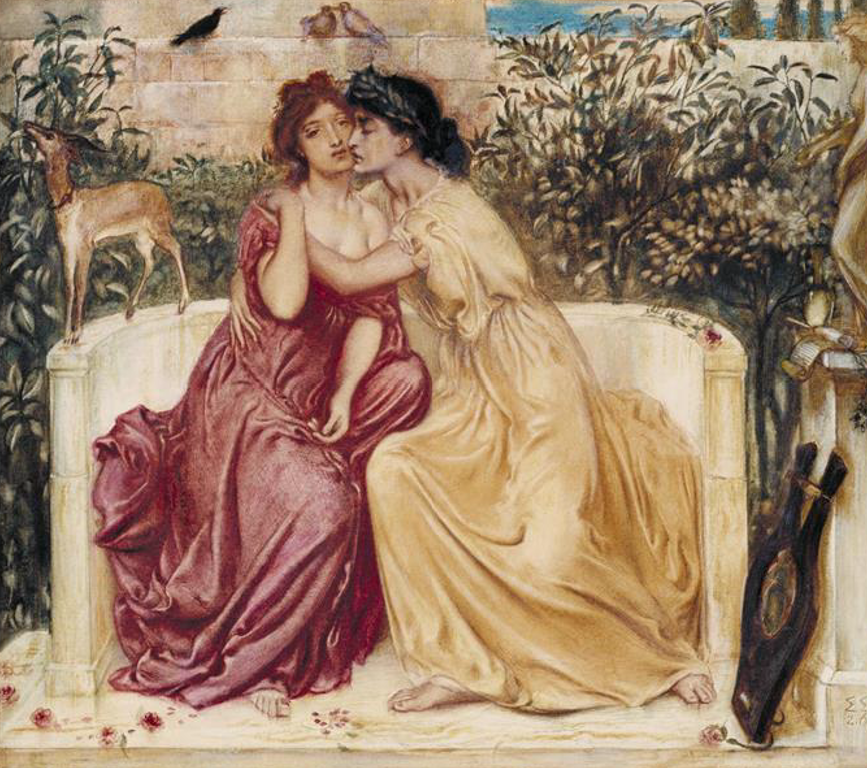
Photo source: wikiart.org
This watercolor portrait depicts the Greek poet, Sappho of Lesbos, with her lover, Erinna. Sappho once wrote, “Sweet mother, I cannot weave— slender Aphrodite has overcome me with longing for a girl.” Who knows – maybe she wrote that famous quote about Erinna!
Noonday Heat (1858-1929) by Henry Scott Tuke
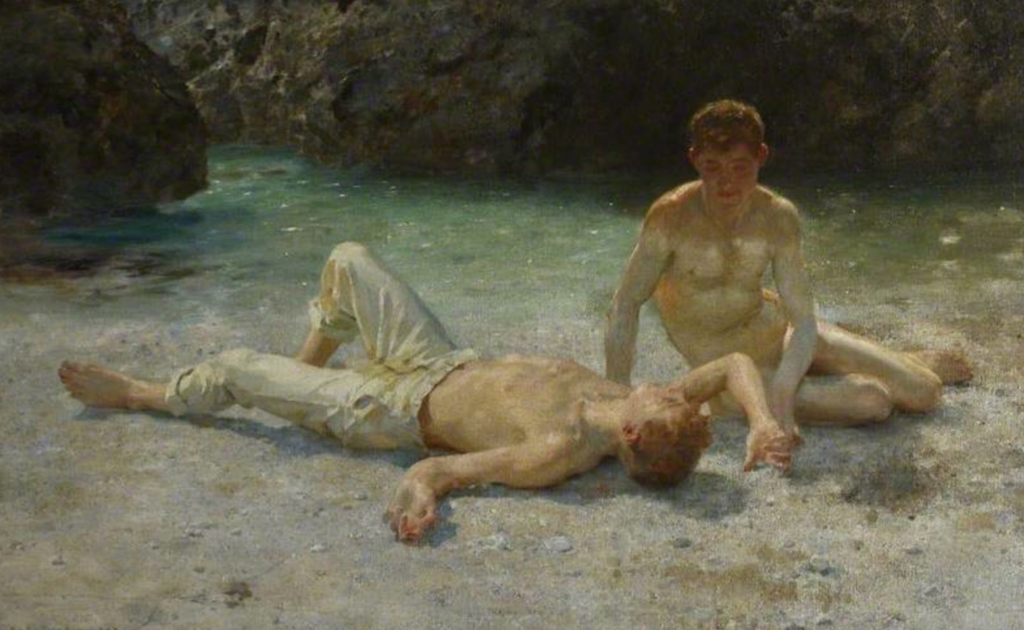
Photo source: artuk.org
In another oil on canvas work, two men sit together, hidden in a cove after an assumed day at the beach together. The subtle reflections of light dappling the water mixed with the upright man’s tender gaze on his lover adds an almost ethereal, dreamlike quality to the piece.
La Belle Dame sans Merci (1853-1928) by Frank Bernard Dicksee
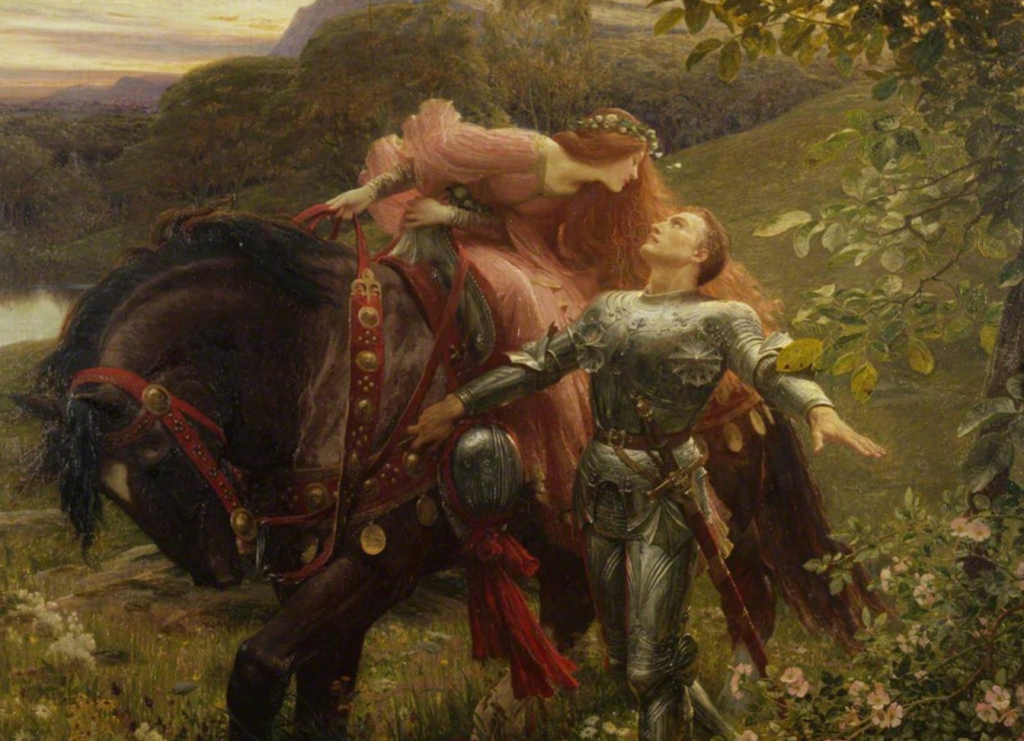
Photo source: artuk.org
The last work in this article, yet another oil painting, is a beautiful rendering of a famous ballad by Keats with the same title that tells the tragic story of a knight who meets a mysterious, nymph-like woman and falls madly in love with her before she leaves him, never to be seen again. Despite the poem’s sullen ending, this painting itself shows the magic of love at first sight: enchantment, helplessness, and hope all wrapped into one.